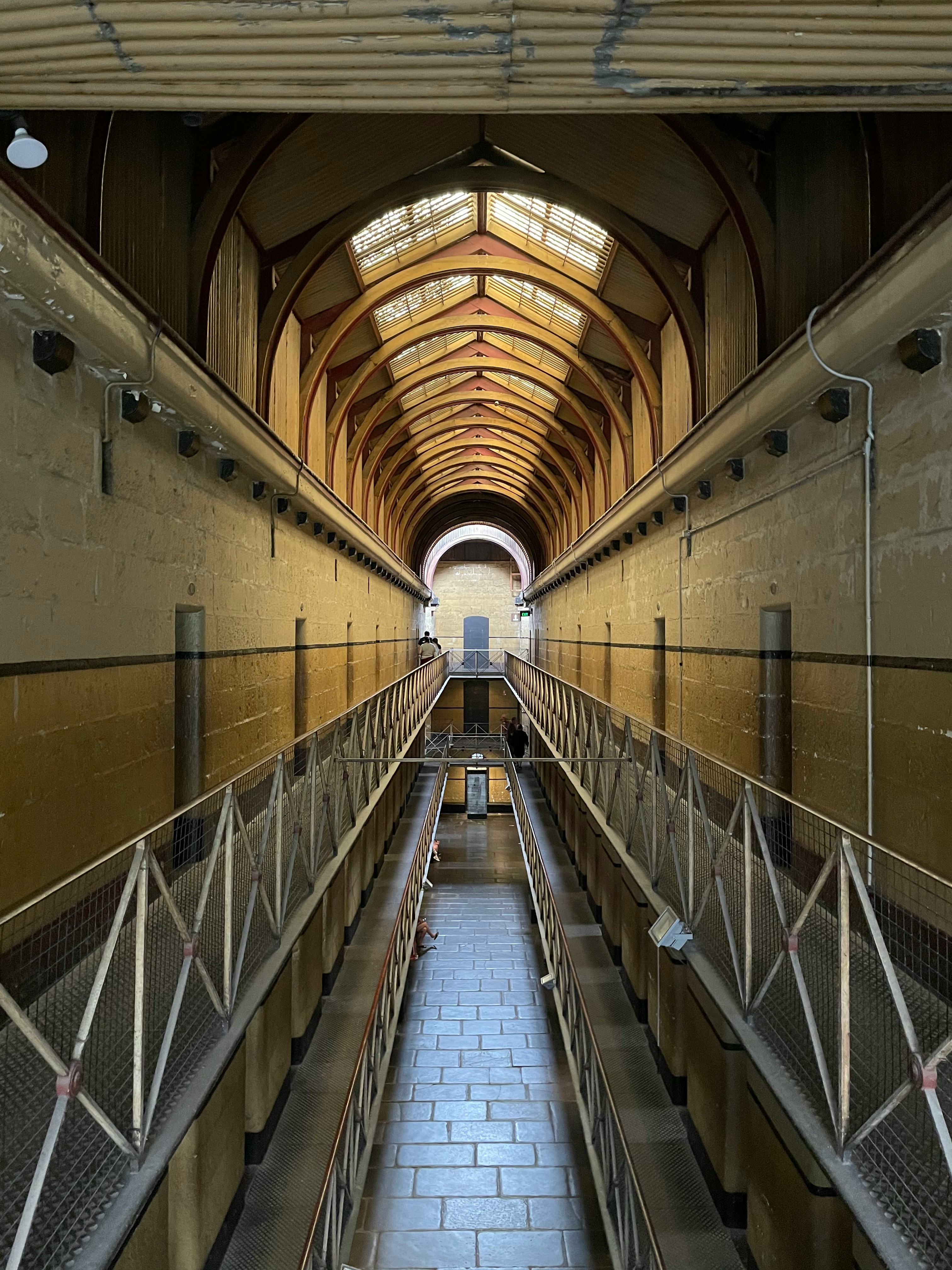
History of Old Melbourne Gaol
Construction of Melbourne Gaol began in 1841, during a period when the settlement of Melbourne was experiencing rapid growth. The prison officially opened in 1845, initially accommodating a relatively small number of inmates. Following the discovery of gold in Victoria in 1851, Melbourne's population expanded dramatically.
As the city grew, so did the demand for prison accommodation. The gaol underwent several expansions, including the construction of the surviving cell block, completed in 1858. Prison life was difficult, with inmates subjected to strict discipline and confined within cold bluestone cells. Men, women and children were imprisoned for offences ranging from minor crimes to murder.
Old Melbourne Gaol also became a place of execution. Its most famous prisoner, Ned Kelly, was hanged in November 1880 following his conviction for murder. His execution remains one of the most widely remembered events in the prison's history. The gaol ceased operating as a prison in 1924 and was formally decommissioned in 1929. Although portions of the original complex were demolished, the surviving buildings were eventually preserved, allowing future generations to explore an important part of Melbourne's past.